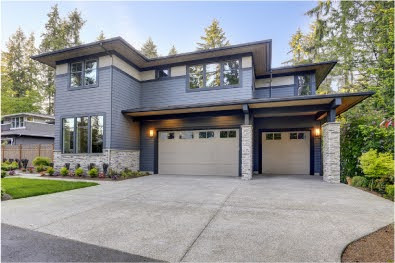
Why not get in touch for your free quote today!
Exposed aggregate concrete has become a staple in modern construction and design. It offers a unique blend of durability and aesthetic appeal to any property.
Exposed stone or pebble finish has made this type of concrete popular. It's versatile and has a striking appearance.
If you’re looking for a one-stop shop on all things exposed aggregate concrete, then you’ve found the right spot. It's the go-to choice for your concreting needs. It also has niche uses for home renovation and commercial projects.
We'll also include FAQs to answer your burning questions about exposed aggregate concrete.
Let’s dive right in!
Table of Contents
So Why Choose Exposed Aggregate Concrete?
When choosing materials for construction and design projects, you have many options. However, only a few fit the bill. Exposed aggregate concrete stands out as the superior option for several reasons including:
Near Indestructible
Exposed aggregate concrete is renowned for its exceptional durability. It doesn't crack, warp, or fade over time. It stays intact and looks good for years.
The composition of this material is strong, making it resilient. It can endure tough weather and daily use.
Effortless to Maintain
Exposed aggregate concrete has a major advantage: easy maintenance. This surface does not need sealing, staining, or painting. It's unique compared to other options.
It only requires minimal upkeep. Simple routine cleaning is often enough to maintain its appearance.
Pretty (and) Versatile
It also offers a unique and attractive look that’s hard to replicate with other materials. The stones or pebbles in the concrete give a natural, textured look. This adds character and class to any space.
It can complement a wide range of architectural styles, modern and traditional.
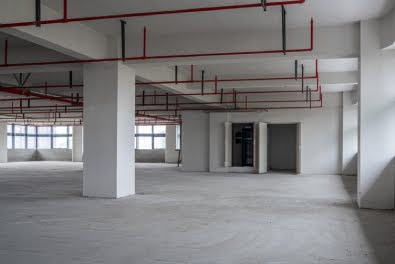
It Lies in Its Design and Aesthetics
Exposed aggregate concrete meshes functionality and artistry effortlessly. It allows for more than a foundation for construction, it’s an outlet for creative expression.
Architects, designers, and homeowners all love the vast design possibilities. It's a preferred choice for everyone.
It stands out for 2 distinct reasons which are:
- Customizable Colour and Texture: The choice of the aggregate determines the colour and texture. Quartz, granite, limestone, or recycled glass are common options here. Every aggregate option can match the colours of your home or landscape.
- Unique Finishes: The finishing process also plays a crucial role in its final appearance. Sandblasting, acid etching, and polishing can change the texture and sheen. The surface can go from rough to smooth with these techniques. Professionals are best suited to achieve distinct finishes using these techniques. We'll discuss them below.
There are 2 more reasons to stick to exposed aggregate concrete. This time it’s all about versatility in design:
- Adaptability in Style: Your home can be modern, traditional, or somewhere in between. Exposed aggregate concrete can be customised to match your architectural style.
- Adaptability in Uses: Its application is not confined to outdoor spaces. Exposed aggregate can be used for floors inside the home. It creates a seamless transition between outdoor and indoor spaces.
Installation Made Easy and Techniques to Make it Easier
Installing exposed aggregate concrete is both an art and a science. You need precision, skill, and the right techniques to pull it off. These are needed to achieve the look you’re aiming for that’s also practical.
It’s a straightforward process if you’re a veteran and professional of the craft. But since most of us aren’t, here is an overview of how that process goes:
1. Base Preparation: The first step involves prepping the ground. Excavating and compacting the soil happens here.
2. Forming: Wooden forms or metal edges are then set up to define the shape and level of the concrete surface. This step is crucial for beautiful designs that also drain well.
3. Mixing and Pouring Concrete: The concrete is then mixed and poured into the forms. Consistency is key here to make sure everything is evenly distributed.
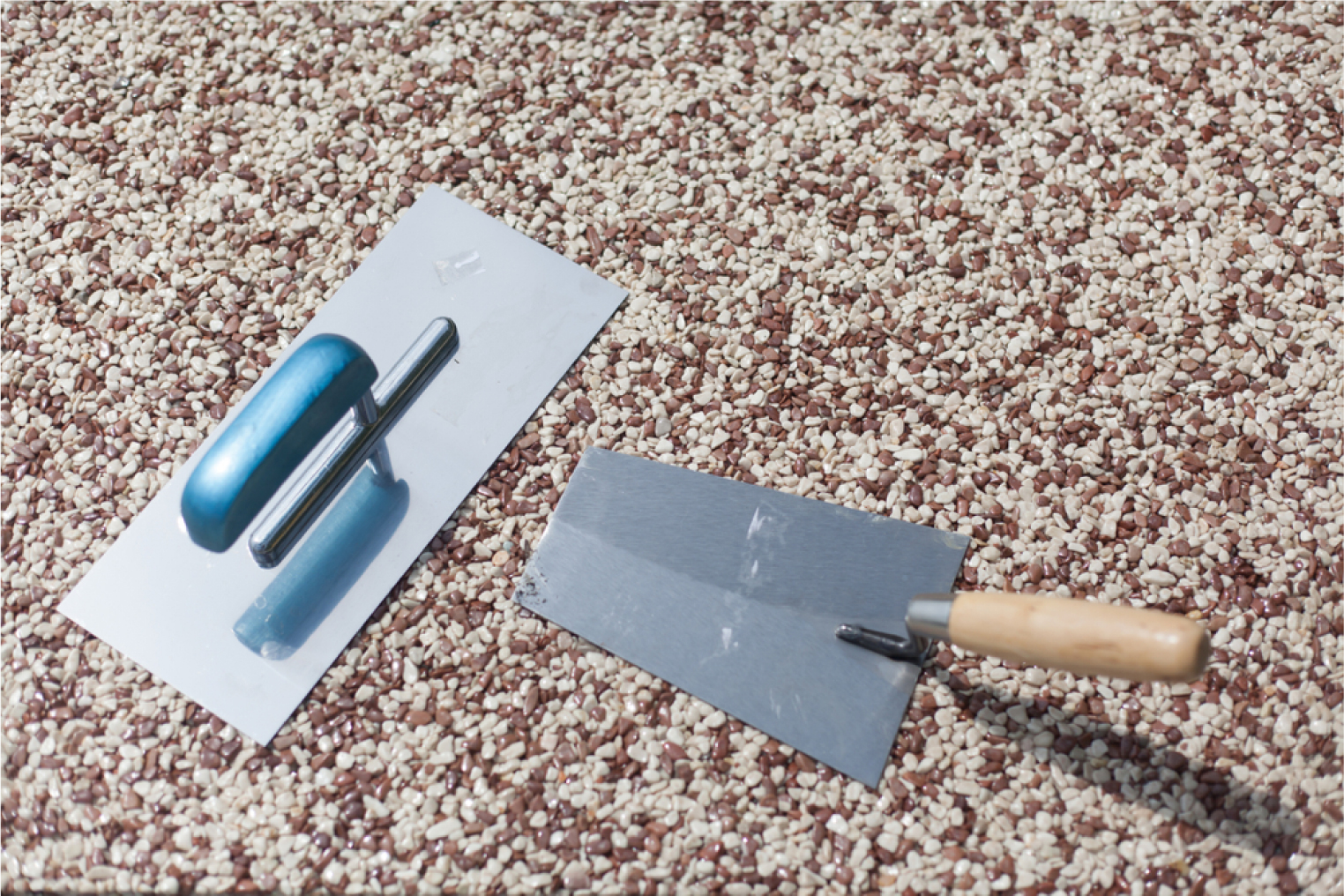
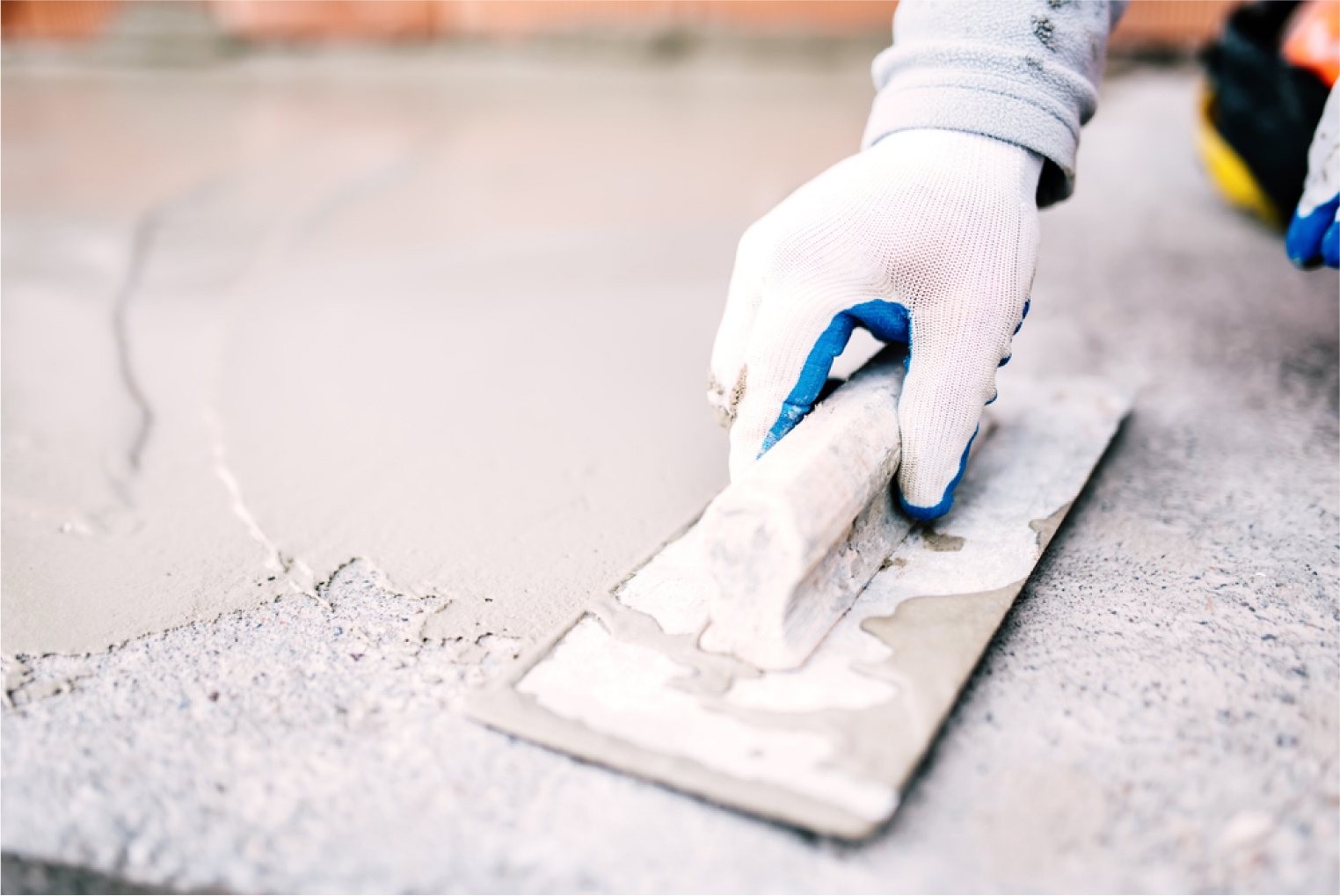
4. Levelling and Smoothing: Once poured, the concrete is levelled and smoothed with trowels.
5. Exposing the Aggregate: The method of exposing the aggregate is what gives this type of concrete its unique look.
6. Curing: After exposure, the concrete must be allowed to cure properly. This can take a few days to a week.
Now, before we end on the curing part of the process, let’s take a step back at the aggregate exposure step. Different techniques of exposing the aggregate will yield different like:
Surface Retarder Method
This involves applying a chemical retarder to the surface of the concrete. It's a chemical used to slow down the curing of the top layer. In the later stages, this is washed away to reveal the aggregate.
The result is a finish that’s generally smoother and more uniform. It's ideal for areas where you want a more consistent appearance.
Water Washing
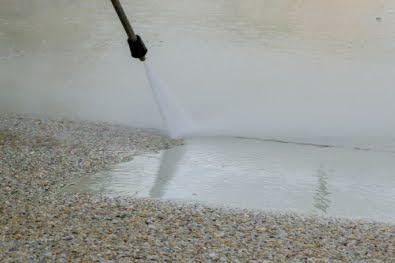
This technique requires washing (sometimes brushing) the surface of the concrete with water. It's basic as technique comes but it needs a power washer.
This technique is for irregular finishes but with a more organic appearance. Landscapes and garden designs often use this for an earthy look.
Abrasive Blasting
This is a more intense version of water washing but with the water. Sandblasting or shot blasting is also used here. This method offers a more controlled and uniform exposure.
The result is an even rougher look but it gives a more slip-resistant surface.
But Remember…
Understanding the basics is helpful. However, achieving a perfect finish needs professional expertise.
Professional installers have a deep understanding and experience with exposing aggregates. They use techniques like precise application of chemical retarders and well-timed water washing. The complexity of these techniques demands skill and expertise.
They know the ideal timing for each process step. This guarantees a flawless finish that is challenging to achieve with DIY methods.
Remember that professionals have access to specialised equipment. They use those for consistent finishes for every job. It also contributes greatly to the overall look and strength of the concrete.
Does it Really Need Maintenance and Repair?
The key to maintaining exposed aggregate concrete lies in regular, simple care. The surface should be routinely cleaned to remove dirt, debris, and stains. This can be done using a broom or a hose for regular cleaning, and a pressure washer for a more thorough clean. It's vital to avoid using harsh chemicals that can damage the aggregate or the sealant.
But even though it's durable, it's not invincible. The occasional heavy impact, extreme weather, or just plain old ageing can damage it.
Fortunately, repairs are usually manageable. For minor cracks or chips, a concrete patching compound can be used.
Leave the repair of large cracks or loose aggregate to professionals. You can be sure it’s in good hands with experts doing it for you.
Here’s How to Cover Up Exposed Aggregate Concrete
If you’re more particular in your maintenance, then you can cover up your exposed concrete aggregate. Revamping it can breathe new life into your outdoor spaces and give them a much fresher look.
If you’re more particular in your maintenance, then you can cover up your exposed concrete aggregate. Revamping it can breathe new life into your outdoor spaces and give them a much fresher look.
Here's a rundown of effective ways to cover up and enhance your exposed aggregate concrete:
Concrete Overlays
Apply a new layer of concrete mix or a special resurfacing material over the old surface to fix damages, smooth it out, or prep it for decorative touches.
Textured Coatings
Add some texture with coatings that not only look good but also provide slip resistance. They come in various colours and styles, making them great for beautifying and safety-proofing areas.
Painting
A quick and budget-friendly option, concrete paint can make a big difference. Opt for outdoor-specific paint to ensure it withstands the elements.
Mulching
Though not a way to cover concrete directly, mulching around it can improve your surroundings’ overall look and blend hardscape with greenery.
Pebble Finishes
For a touch of nature like mulching, pebble finishes use small stones set in concrete or a binder, offering an earthy look perfect for paths or anywhere near pool areas.
Pavers
Laying pavers over your concrete is a stylish way to add colour and texture. With a range of materials like brick or stone, you can get creative with patterns.
Sealants
It protects your concrete from moisture and dirt as well as adds a glossy or matte finish, keeping it looking as good as new.
Surface Coating
Special coatings can defend against wear and tear, chemicals, and stains, while also bringing in some colour and texture.
Tile
Tiles provide a long-lasting and elegant cover option, with endless colours, patterns, and finishes to choose from for patios and walkways.
Flagstone
For a natural and rustic look, flagstone over concrete creates a unique, organic pattern, ideal for garden paths and patios.
Maybe a Comparative Analysis Can Clear Things Up
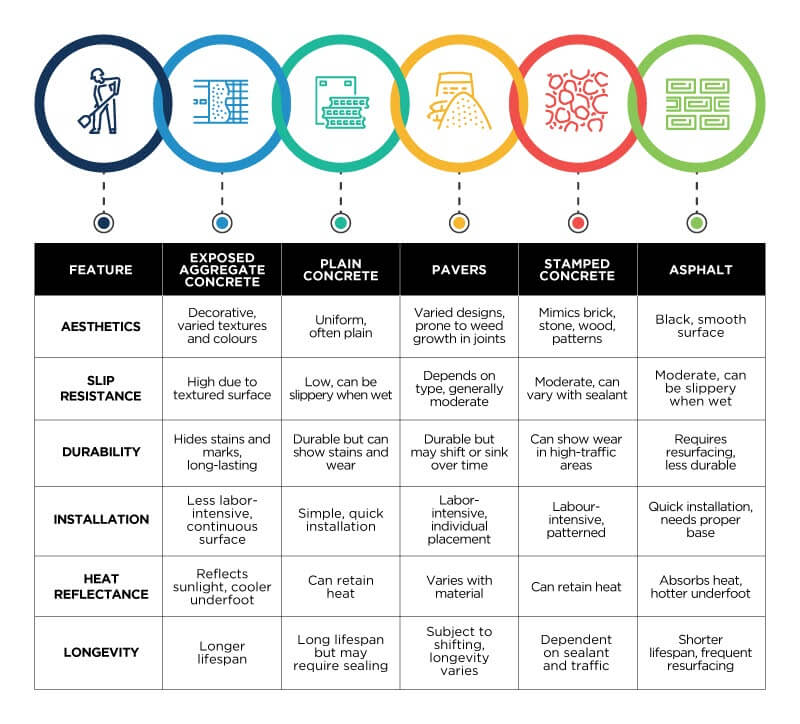
How does exposed aggregate concrete compare to other types like stamped concrete? Check out this table:
Now, About the Safety and Regulations Involved
We’ve talked a lot about how slip-resistant exposed aggregate concrete but there's more to it. Durability and resistance to heavy loads also make it a top choice.
This advantage suits high foot traffic areas. It provides safety without compromising integrity.
As for regulations when installing one for your home, we can speak in terms of Australian standards and regulations. These include:
1. Australian Standards for Concrete: AS 3600-2018, known as the Australian Standard for Concrete Structures, sets out the requirements for the design and construction of concrete structures. This standard ensures that the concrete used, including exposed aggregate, meets the necessary strength and durability criteria.
2. Building Code of Australia (BCA): The BCA provides the minimum requirements for safety, health, amenity, and sustainability in the design and construction of buildings. It includes guidelines on the use of materials like exposed aggregate concrete, particularly in terms of fire resistance and structural integrity.
3. Local Council Regulations: Depending on the location, local councils in Australia may have additional regulations regarding the use of exposed aggregate concrete, especially in public areas. These regulations can include specific requirements for slip resistance, drainage, and environmental impact.
4. Work Health and Safety Regulations: Under the Work Health and Safety Act, there are regulations that govern the safe installation of construction materials, including exposed aggregate concrete. These regulations ensure that the installation process is safe for workers, minimising the risk of accidents and injuries.
Time to Keep up With Cost and Budgeting
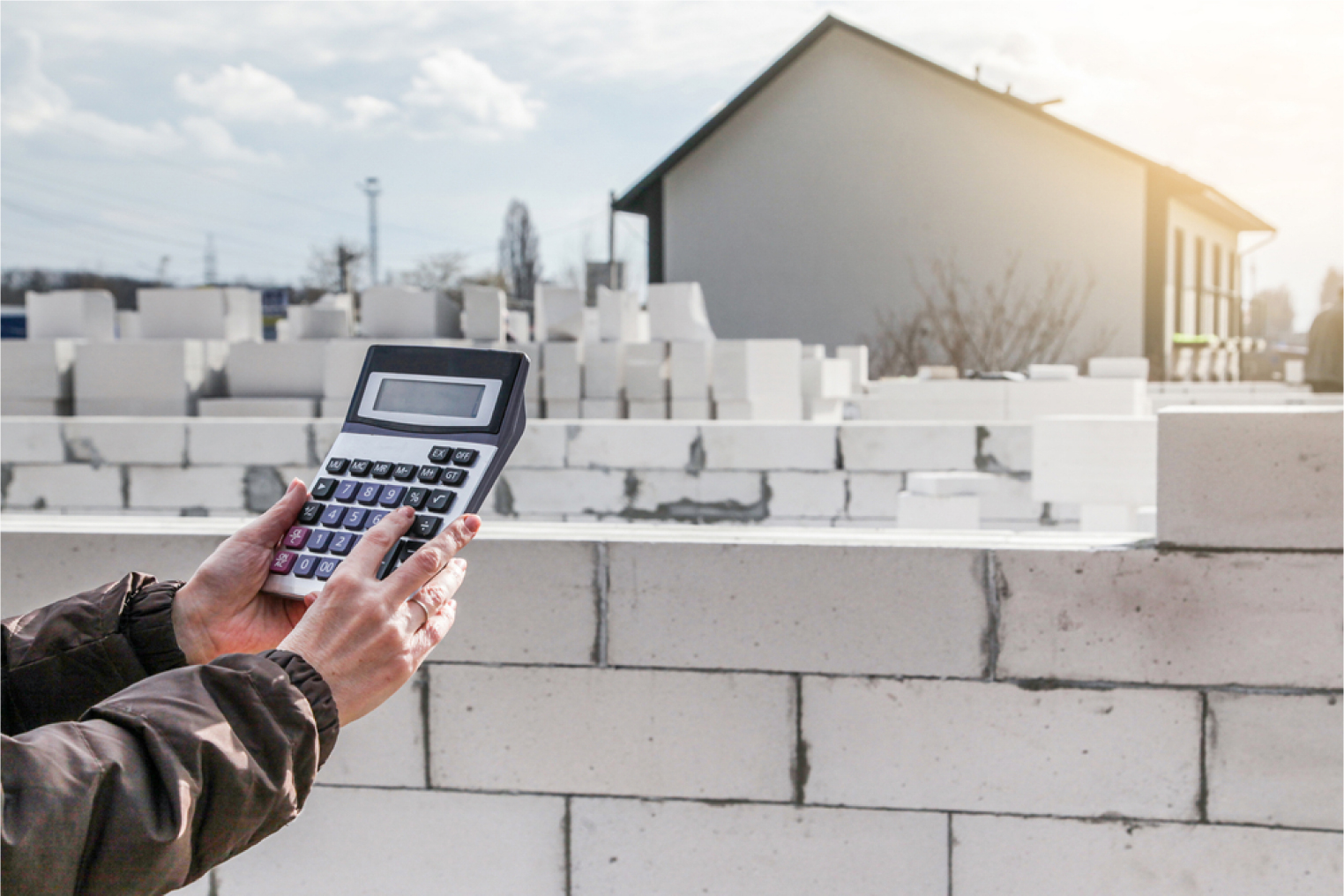
When it comes to figuring out the costs for exposed aggregate concrete, knowing what affects the price can really help you plan your budget. The cost can change a lot depending on what you go for.
Here's a quick breakdown of what you might expect to pay:
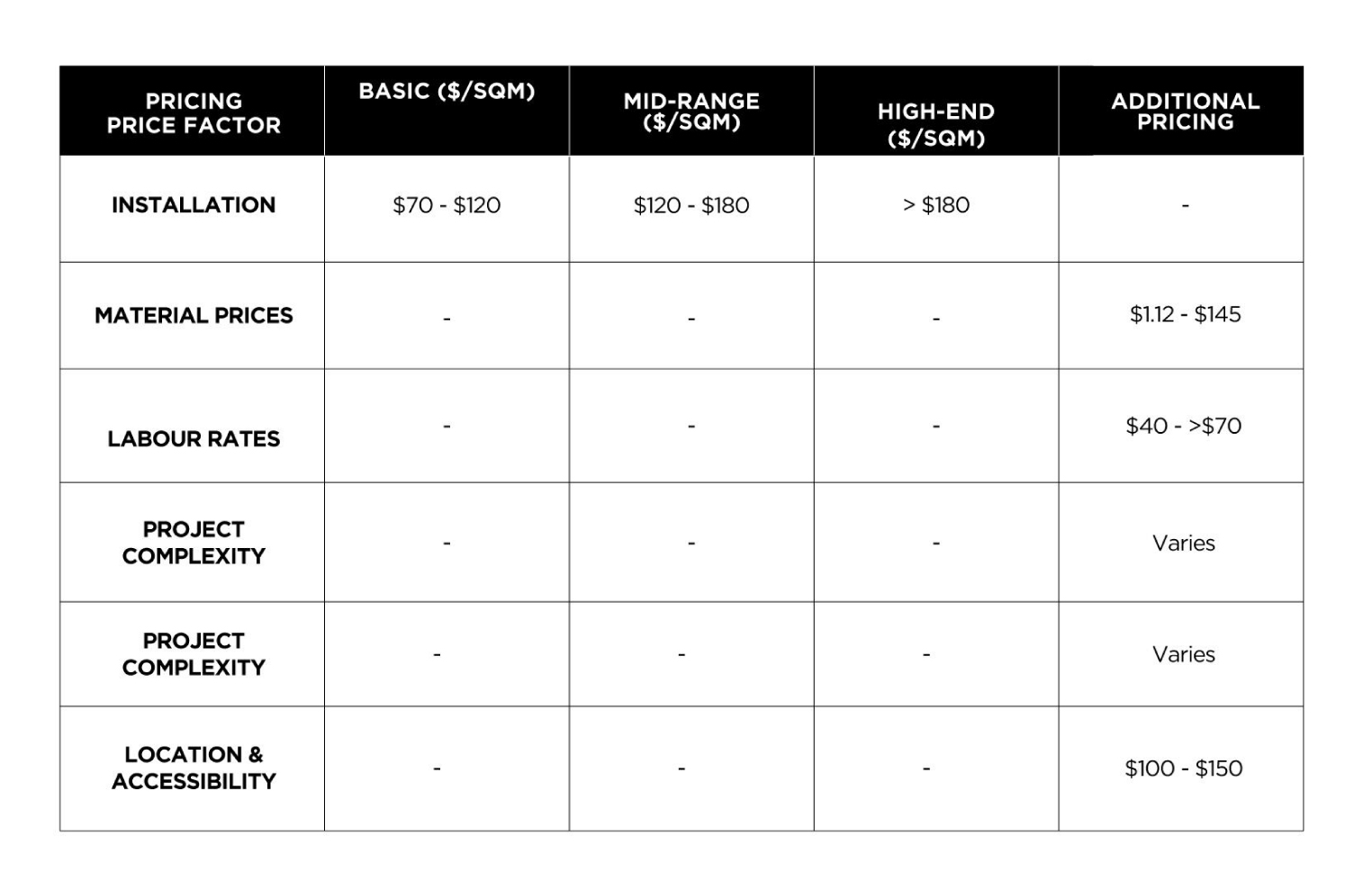
• Basic Exposed Aggregate Concrete: Starting prices are usually between $70 to $120 for each square metre. This is for the straightforward stuff using standard aggregates on a site that's ready to go.
• Mid-Range Options: If you're looking for something a bit nicer or a design that's a little more complex, prices go up to between $120 and $180 per square metre.
• High-End Exposed Aggregate Concrete: For the top-of-the-line choice, with the best aggregates and fancy designs, you're looking at costs that start going over $180 per square metre. This jump in price is because of the high-quality materials needed, plus the extra work and know-how to get it all done.
Apart from these prices, think about the following too:
Material Costs
The choice of aggregate plays a big role in setting the price. For instance:
Budget-Friendly Options: Crushed stones and shells might cost anywhere from $1 to $9 per square metre, making them an affordable choice. Premium Selections: For high-end looks, like white pebbles, be prepared for prices to jump significantly, ranging from $70 to $145 per square metre.
Labour Prices
Like material prices, there are ranges to pricing but the standard rate is around $70 per hour. Though this can change based on experience and job demands. As for the ranges, here they are:
• Entry-Level Rates: Newbies to the field might charge about $40 per hour. These rates are for those with less experience, potentially taking longer to finish a task but at a more budget-friendly rate.
• Mid-Range Rates: Concreters with 1-5 years under their belt usually ask for $40 to $70 per hour. This range offers a sweet spot of quality and affordability.
• High-End Rates: For the cream of the crop in concreting, expect to pay more than $70 per hour. These pros bring top-notch skills and reliability, making their higher rates worth it.
Something Specific to Each Project
• Size: The bigger the project, the more you can save per square metre thanks to economies of scale. For example, a typical driveway of about 30 square metres might cost between $3,600 and $5,400. • Design: Going for custom designs or complex patterns? That'll bump up the price. The more intricate your project, the higher the price due to increased labour and materials. • Terrain and Foundation: Working with a slope or a less-than-ideal base? These factors can introduce additional costs. A sloped surface might add around $20 per square metre, and fixing up a poor base could cost over $1,000 extra because of the additional prep work needed.
Location and Ease of Access
Prices can swing widely depending on where you are in Australia. Cities like Melbourne, with their high demand and labour costs, might see prices on the higher end, from $100 to $150 per square metre.
In densely packed areas or spots that are tough to get to, you might see higher prices. This is due to the challenges and extra effort required to bring materials and equipment to the site.
For the most accurate pricing in areas like Gisborne, Gisborne South, and Sunbury, reaching out to local contractors is your best bet. They can give you a quote that reflects the unique aspects of your location, including access difficulties, local demand, and the availability of specific materials and skilled labour.
Here’s a simplified breakdown:
And Don't Forget About Environmental Considerations
Aside from having low maintenance needs and being durable, it's also eco-friendly.
A significant aspect is its ability to incorporate recycled materials. Recycled glass, crushed concrete, and slag are aggregates that can be used here. They reduce reliance on virgin materials and minimise waste.
The use of locally sourced aggregates is also a boon for sustainability. Local sourcing cuts down on transportation emissions and supports local economies. This reduces the overall environmental impact when transporting over long distances.
Exposed aggregate concrete also has reflective properties. This means it can help reduce heat in densely populated areas like in the cities. It comes in handy when you're trying to cool down your surroundings.
Finally, certain types of exposed aggregate concrete can be designed to be permeable. This allows water to seep through the surface into the ground. This advantage is very useful if you're conscious about your water usage.
Geographical and Climate Considerations Are Another
In warmer climates, exposed aggregate concrete is very effective against significant heat. Not to mention its reflective properties we’ve discussed above.
Conversely, it also wins against the freeze-thaw cycles in cold and freezing climates. In humid and wet climates, being slip-resistant makes all the difference in safety.
If you have a home in a coastal area, its resistance to salt and corrosion is a huge win. It's the ideal choice against weather conditions unique to the sea.
To find local suppliers, try a combination of different approaches. Try online research, local directories, home improvement stores, and professional recommendations. These can be overwhelming at first but keep going at it and you’ll find a combination that works for you.
Now See Some Specific Applications in Action
If you’re still in the dark on how this can work on your home projects, here are some inspirations on how it can be used:
- Driveways and Walkways: Exposed concrete aggregate is both durable and charming. The wear and tear of vehicle traffic is a cakewalk while staying pretty to look at. For walkways, it can be used like a guide through styling for your visitors.
- Patios: It provides a slip-resistant surface that is safe for wet feet while adding a touch of elegance.
- Pool Decks: Again, for its slip resistance. Exposed aggregate concrete is a preferred material here for its endurance against water and chemical exposure. It also stays cooler underfoot compared to other materials.
Exposed aggregate concrete is also a great fit for commercial properties. If you happen to own one, use it in:
1. Public Walkways and Pavements: This option is safe for areas with many people walking. It works well in places like malls, offices, and parks. Corporate Building Entrances and Lobbies: The material can be customised to match any building's style. It creates sophisticated and professional entrances and lobbies.
2. Parking Lots and Driveways: Exposed concrete aggregate is strong and durable, able to support vehicles. Its texture improves grip, reducing slips in oily or wet areas.